Microsoft Office & Windows Licensing: Economical Alternatives
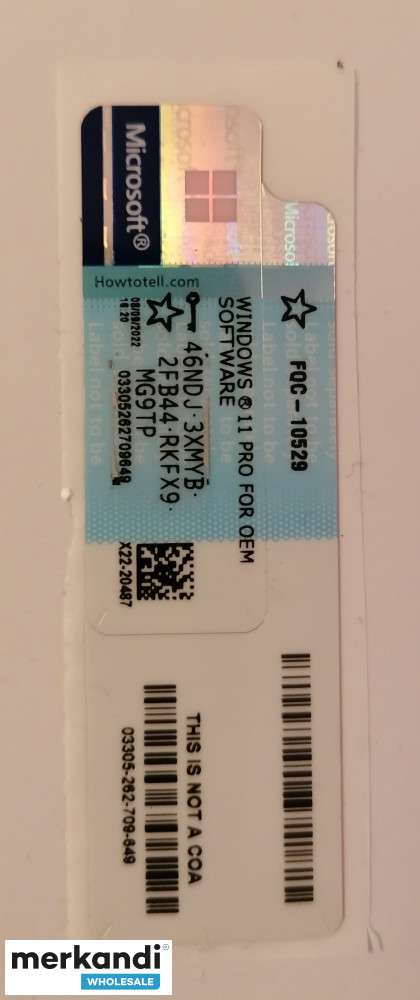
For small-sized businesses, "cost-effective" software licensing doesn't mean finding the cheapest key on the internet. It's a strategic investment which lowers risk in the long run, guarantees compliance and can scale up as the business grows. An ad-hoc mix of greymarket windows11 oem key purchases and stand-alone officelizenz kaufen purchases result in a weak and unmanageable foundation for IT. The most effective cost-effectiveness of a system can only be realized through understanding the interdependencies of Windows licensing, Office subscribtions, and security tools. This guide moves beyond simple cost estimates to examine the 10 most crucial aspects of building a professional, sustainable and ultimately cost-effective software environment for your growing company, connecting options that are made from desktop OS, server access, and security.
1. Windows 11 Home is not ideal for use in business.
The most common, and costly error is to purchase the cheapest "Windows 11 Home key" for your business workstation. Windows 11 Home lacks BitLocker security for sensitive data, is unable to join Active Directory or Azure Active Directory and doesn't provide local Group Policy to control IT. Furthermore, it is required to run disruptive updates. Windows 11 Pro should be utilized on systems that manage the business information. The modest upfront cost over Home is not negotiable in terms of security, manageability and professional credibility. Any business that is dependent on Home licensing is operating within the consumer standard, which can be a major risk.
2. Calculator of Hardware Refresh Costs: OEM in comparison to. retail.
If you purchase Windows 11 for business The OEM option is versus. Retail decision has long-term financial implications. The OEM license might be less expensive initially, but it will expire with the first PC that the license is installed on. A retail license is transferrable. OEM is a better choice for disposable budget PCs. For workstations with higher end features or if you upgrade components individually, Retail licenses save money over time. Calculate the TCO (Total Cost of Ownership) for a computer that has a lifecycle cost of $800, and an OEM Pro licence is $140 as opposed to Retail at $200, the $60 premium Retail license is basically 'insurance' for future flexibilities.
3. Microsoft 365 Eco-system: Where true cost effectiveness lives.
Office 2021, for example is no longer available in a single-time office license. Microsoft 365 Premium for Business (approx. $22/user/month) is often the most affordable bundle. It includes: Windows 11 Pro upgrade rights (solving your `windows 11 lizenz kaufen` need), the full Office suite, 1TB OneDrive cloud storage, business-class email, and–crucially–Intune for device management and Azure AD for identity. This single subscription will allow you to upgrade and legitimize the entire desktop stack. It also provides management tools not available with standalone products. It changes IT from being a capital cost (CapEx) to an operational expense that is predictable (OpEx).
4. Windows 7 Upgrade path: A compliance and Security mandate
Businesses that remain on Windows 7 are sat on a time bomb that isn't supported. Upgrades aren't just about the latest features, it's also a security and compliance requirement. It's not about purchasing the latest "Windows 11 lizenz". This is an opportunity to evaluate the entire software package. Microsoft 365 Business subscriptions modernize security. They allow cloud backups as well as remote work. Not just the new OS key, but also the cost of the subscription is included.
5. Understanding "CAL" Shadow costs in future growth.
Client Access Licenses are required in the event that you plan to use an on-premise Windows Server 2025 server to run file-sharing, databases, and line-of-business applications. Every user or device that accesses the server needs the Cal. It is an additional cost from your `windows 11 pro desktop license. Smaller businesses that plan for growth must factor in CALs when budgeting for the long term. Windows 11 Home or unlicensed usage (which isn't legal to access Windows Server in business contexts) creates serious compliance risks during software audits.
6. Security Integration: Bundling vs. Best-of-Breed.
The licensing complexity is affected by your choice between Windows Defender, which comes included in the package, and third-party software like "kaspersky premium" or "norton 360". Microsoft 365 Business Premium includes enhanced Defender security and centralized security and threat management. The addition of a third-party application could be redundant. It could increase costs and management overhead. The consistency is crucial in the event that there are any regulatory requirements or if you prefer an option made by another firm. A single solution that is licensed for all workstations is more cost-effective and manageable than a patchwork. Security isn't just about the cost of subscriptions however, it is more about the expense of managing disparate systems.
7. Grey Market Trap – False economics in licensing
On markets that are not official there are prices that seem too good be true. These are typically key licenses for volume, OEM keys violating terms, or keys from other regions. Microsoft may deactivate the keys, leaving you with unsecure and unlicensed software. You may also be penalized in the event of an audit. Businesses are exposed to an enormous, unfunded risk. To achieve true cost-effectiveness it is essential to purchase from Microsoft Cloud Solution Providers (CSPs) or authorized distributors. This will ensure full legality as well as assistance and upgrades rights.
8. Perpetual office 2021: A Niche for Static Air-Gapped Scenarios
Office Professional, e.g. 2021), is a perpetual standalone license that is only available for a small-business case. The workstation will not require cloud services and won't connect to modern-day management system. It's rare. A subscription model is more suitable for small-sized businesses that require cloud-based file storage (Teams, SharePoint), collaboration (Teams), and mobile access. Perpetual licenses mean locked-in software, stagnant services and lost productivity.
9. Modeling your Mobility: Device-Based or. User-Based Licensing.
The licensing model of the past is device-bound. One Windows 11 OEM license per PC. Microsoft 365 uses a user-based licensing model. One user license covers up to five devices (PC, Mac, tablet, phone). It is an extremely cost-effective option for businesses that have mobile employees, hybrids, or who offer desktops and laptops. The individual is licensed but not the machine. When you are planning your licensing strategy, think about the actual mobility of your workforce. A user-based subscription often reduces the total number of licenses needed compared to a rigid device-bound method.
10. Building an Coherent Stack for Audit-Readiness.
It is important to have a stack of software that is simple, well-documented, and compliant with the laws. Microsoft 365 business premium (per per) for Windows 11 Pro and Office, as well as Security and Management. Legal OEM or Retail Windows 11 Pro licensing for devices that are not covered under the subscription. This stack has a predictable structure that is auditable and scalable. It removes the "hidden cost" of chaos, such as delays due to incompatible systems, loss of data due to inadequate security, or exposure to legal liability due to non-compliance. View the recommended windows 11 kaufen for website examples including office2019 download, microsoft visio, microsoft office download, microsoft visio, windows server os, office2019 download, ms project, office 365 key, visio software download, microsoft office with key and more.
Software Licensing Evolution: From One Time Purchase To Subscription.
Microsoft 365 is a subscription service that allows users to gain access to the latest version of Windows 7 without needing to purchase a DVD. It is a significant shift in the digital economy. This is not a simple change in payment and rather a major change in the relationship between software and users. This has implications for security, efficiency, and the cost of ownership. The old paradigm–exemplified by a one-time `office lizenz kaufen` or an `windows 11 oem` key tied to hardware–valued static ownership and predictable, upfront capital expenditure. Subscriptions (via Microsoft 365), Kaspersky Premium and Norton 360 trade this permanence for continuous updates cloud integration, as well as a move to operational expenses. Understanding this evolution will help you navigate modern licensing and avoid the pitfalls associated with grey-market keys.
1. The Security Imperative Drove the Change.
The one-time, static model collapsed under the weight of modern cybersecurity threats. The vulnerability of a per-year "office licence" that was in place prior to 2019 or an older "windows 7" license is increased as security threats evolve. Subscribers are aligned with the vendor's financial interest with that of the user. Microsoft will continue to update Defender as well as Office 365 to justify your monthly cost; Norton and Kaspersky must provide new security features to keep your. The previous model led to end-of-support highs (like Windows 7's), while the subscription is a maintained security perimeter.
2. Ecosystem Lock in From the Platform to the Product.
A one-time purchase of a product is an online platform. A subscription is for a platform. Windows 11 home keys are comparable to an OS. Microsoft 365 Business comes with Windows 11 (with the upgrade rights), Office 2013, OneDrive, Teams and SharePoint. The real value lies in the seamless integration. This is not just a powerful lock-in but also a remarkable convenience and performance, which a pile separate perpetual licenses (windows lizenz Office, Windows lizenz, separate backup) would never be able to achieve. The licensing unit is now the identity of the user, not the device.
3. Existential Crisis on the Grey Market
A subscription-based system is fundamentally hostile to the black market that thrives by windows11buy scams. A subscription key is an account credential, not just a simple string of characters. It's associated with an account with billing and expires. This makes it virtually impossible to sell illegally in the same way that Volume License or OEM keys are. The increase in subscriptions has progressively weakened the key-resellers market. Users are being pushed toward legal channels, while others are still using obsolete, unsecure perpetual keys.
4. Business Accounting Revolution: Predictable OpEx and Lump-Sum CapEx.
This shift allows businesses to transition software from a large capital expenditure (CapEx, which is a major expense that occurs infrequent, but depreciated for years) instead of a ongoing operational expense. Small businesses could benefit from a better cash flow. It can also impact budgeting. It is necessary to include the cost of the cals that you will pay for your "windows 2025" server, as well as the fees per user for security and productivity software. The total cost of a subscription may be more expensive than a single-time cost, but is accompanied by support and constant advancements that were not offered in the previous model.
5. Windows 11 Dual Nature: What is the "Hybrid Model?" and Why it causes confusion?
Windows 11 is the only operating system that spans both periods. You can still buy a windows11 oem license. You can purchase it through a Microsoft 365 Business/Enterprise Subscription (the new version). This hybrid status creates confusion. Windows "subscriptions" do not serve for the OS in the traditional sense, but for the right of always being updated and having cloud management tools. This creates two distinct classes of users: those who "own" an unchanging snapshot (Windows 11 24H2) and those who "lease" an ongoing update service that is continuously updated.
6. Third-Party security software was the pioneer.
Companies such as Norton (`norton 360`) and Kaspersky (`kaspersky premium) were among the first to adopt the subscription model for consumer software. The latest threat definitions were vital to their operations. The company seamlessly changed from selling licenses for three years to the subscription model that automatically renews. To increase the value of their products, they frequently bundle in additional services, such as password managers and cloud backup, to reduce the chance of churning and increase revenue monthly. Their model was a precursor to the shift in the market.
7. The server-side Parallel: CALs in the original "User Subscription"
Client Access Licences (cals) Conceptualized to be used in "Windows Server 2025", is a precursor to subscriptions. While you buy the server software one time, the cals are an ongoing access right. In essence, they're a per-user/per-device "subscription" to the server's services, although typically purchased in large quantities upfront. Azure cloud model allows the cloud to operate. It charges storage, compute or user access on a basis of second-by-second or monthly basis.
8. The Data Sovereignty Challenge, and the Loss of 'Permanence'
Subscriptions are notorious for their lack of permanence. If you cease paying the subscription fee for your Office license, you could lose access to certain applications and your data may be lost if your data is trapped in the cloud ecosystem ecosystem. A perpetual Office 2021 license keeps functioning forever, albeit frozen in time. This gives power to the vendor and creates data locking. A subscription strategy should contain an extraction and data migration plan. It is not necessary in the case of Office 2010 in a box.
9. Fragmentation and the Bundling Counter-Trend.
Subscription fatigue is being combated by the new trend. "Lifetime licenses" are marketing strategies that take advantage of the fatigue triggered by subscriptions. In addition, the bundle of subscriptions, such as a norton 360` + Office deal–is a way to bring value and simplify in a fragmented subscription world. However, these bundles often include a Norton subscription along with an Office perpetual license, creating an unbalanced, hybrid product which illustrates the market's awkward change in.
10. Strategic Licensing in The Subscription Age: Integrated Stack.
In the modern world of business, this likely means: a Microsoft 365 Enterprise subscription (handling Office, Windows and Email, as well as Endpoint Security and Management) + Azure AD & Intune (for identity and device management replacing the traditional Windows Server 2025 or 'cals functions) as well as possibly other specialized third-party security layers. For a modern business, this likely means: the Microsoft 365 Enterprise subscription (handling Windows, Office, Email, Collaboration, and Endpoint Security/Management) and Azure AD & Intune (for managing identity and devices and replacing the traditional windows server 2025` and `cals` functions) + potentially a specialized third-party security layer (like Kaspersky premium for sophisticated threat-hunting). The goal is to bring together management and reduce the amount of vendors. This will enable software to transform from a set of purchased items to a fluid and integrated utility that will power a business consistently and predictably. Follow the best kaspersky premium for more advice including micro soft outlook, microsoft office 2019, microsoft visio, office 2019 professional plus, ms office 2019, windows server software, office 365 key, windows office software, microsoft office download, microsoft 365 key and more.